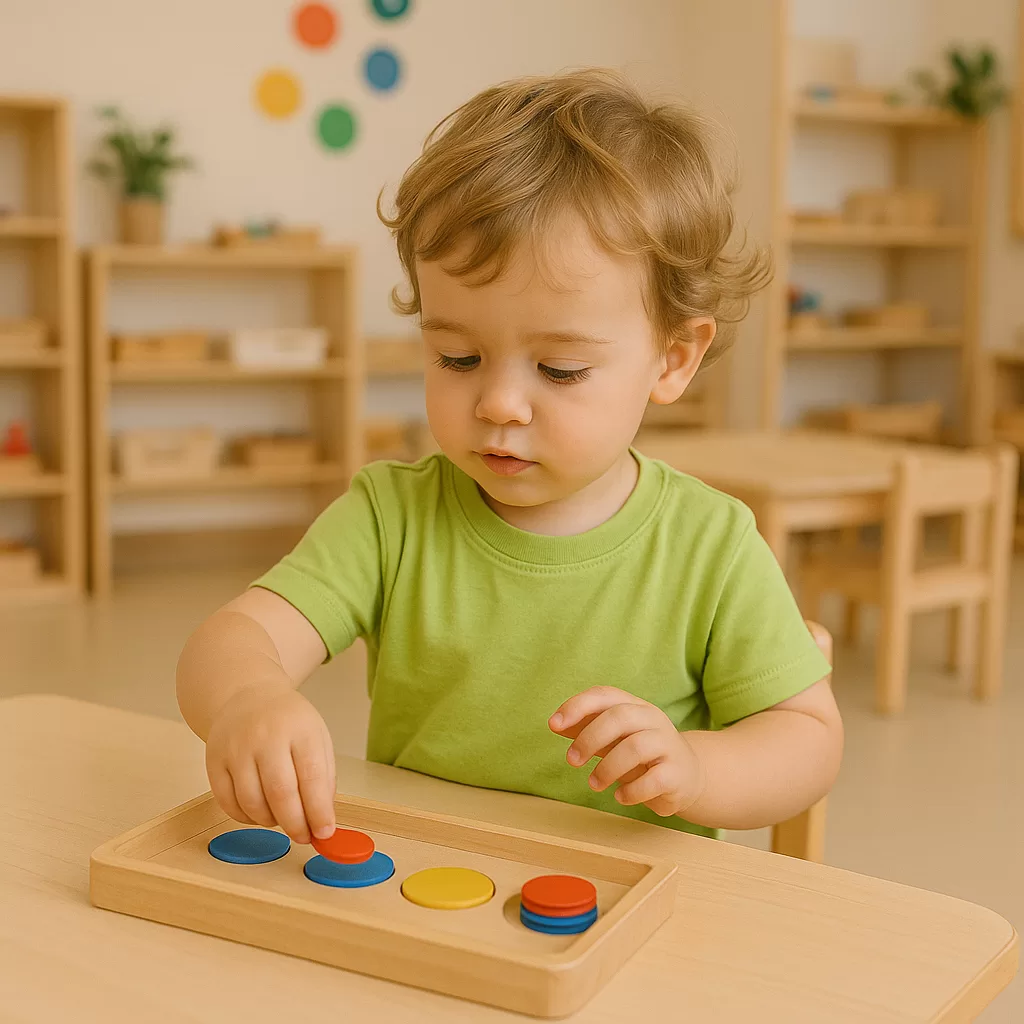
Montessori education, developed by Dr. Maria Montessori in the early 1900s, represents a revolutionary approach to learning that prioritizes the natural development of children. This child-centered educational philosophy has gained worldwide recognition for its unique methodology and remarkable outcomes. Unlike traditional educational systems, Montessori education focuses on nurturing the whole child through carefully designed environments and hands-on learning experiences.
Core Principles of Montessori Education
The Prepared Environment
Carefully curated spaces designed to meet children’s developmental needs
Child-sized furniture and materials that promote independence
Older children develop leadership and empathy by helping younger peers
Younger children learn from positive role models
Competition is replaced with cooperation and mutual support
Emotional Intelligence Building
Grace and courtesy lessons explicitly teach social skills
Conflict resolution strategies are practiced regularly
Emotional regulation develops through peaceful classroom environments
Respect for others is modeled and reinforced consistently
4. Hands-On Learning and Concrete Understanding
Manipulative Materials
Abstract concepts are introduced through concrete, tactile experiences
Mathematical concepts are learned through physical manipulation of materials
Scientific principles are discovered through experimentation and observation
Language development is supported through multisensory approaches
Practical Life Integration
Real-world skills are incorporated into academic learning
Children engage in meaningful work that connects to daily life
Fine motor skills develop through purposeful activities
Sense of contribution and responsibility is fostered
5. Intrinsic Motivation and Love of Learning
Internal Drive Development
External rewards are minimized in favor of internal satisfaction
Natural curiosity is preserved and encouraged
Learning becomes self-directed and personally meaningful
Lifelong learning habits are established early
Joy in Discovery
Wonder and excitement about learning are maintained
Mistakes are viewed as learning opportunities rather than failures
Exploration and experimentation are encouraged
Creative thinking flourishes in supportive environments
6. Academic Excellence Through Understanding
Deep Conceptual Learning
Concepts are thoroughly understood rather than memorized
Interconnections between subjects are naturally discovered
Critical thinking skills develop through guided exploration
Knowledge is constructed rather than passively received
Advanced Academic Outcomes
Research shows Montessori students often outperform peers in standardized tests
Strong foundation in mathematics and language arts
Scientific thinking and inquiry skills are well-developed
Cultural studies provide broad, interconnected knowledge base
7. Development of Executive Function Skills
Concentration and Focus
Extended work periods develop sustained attention
Deep engagement with chosen activities builds focus
Multitasking is discouraged in favor of mindful attention
Mental discipline develops through practice
Planning and Organization
Children learn to plan their work and manage materials
Sequential thinking develops through structured activities
Organization skills are practiced daily
Goal-setting and achievement are internalized
8. Respect for Diversity and Global Awareness
Cultural Studies Integration
World geography, history, and cultures are explored comprehensively
Appreciation for diversity is fostered through multicultural curriculum
Global citizenship concepts are introduced early
Respect for all life forms and environments is emphasized
Peace Education
Conflict resolution skills are taught and practiced
Peaceful communication is modeled and reinforced
Understanding of interdependence and cooperation
Social justice awareness develops naturally
Conclusion
Montessori education offers a compelling alternative to traditional educational approaches, with numerous research-backed benefits for children’s academic, social, and emotional development. The method’s emphasis on independence, intrinsic motivation, and respect for the child’s natural development creates learners who are confident, capable, and passionate about learning.
While implementation requires careful consideration of training, materials, and philosophy alignment, the long-term benefits of Montessori education extend far beyond academic achievement. Students develop into thoughtful, capable individuals who are well-prepared for success in an ever-changing world.
The investment in Montessori education represents an investment in developing the whole child, creating not just successful students, but compassionate, creative, and competent human beings ready to contribute positively to society.
Best Play School in Delhi – GD Goenka La Petite, Rohini Choosing the right play school for your child is a crucial decision. A child’s early years shape their cognitive, social, and emotional development. If you are looking for the best play school in Delhi, GD Goenka La Petite, Rohini, stands out as the top
As children grow and learn, they need a variety of experiences and opportunities to develop their skills, knowledge, and understanding of the world around them. GD Goenka La Petite Montessori Pre School in Rohini understands this and has designed a curriculum that focuses on Street Smart Learning to help children become confident, independent and responsible